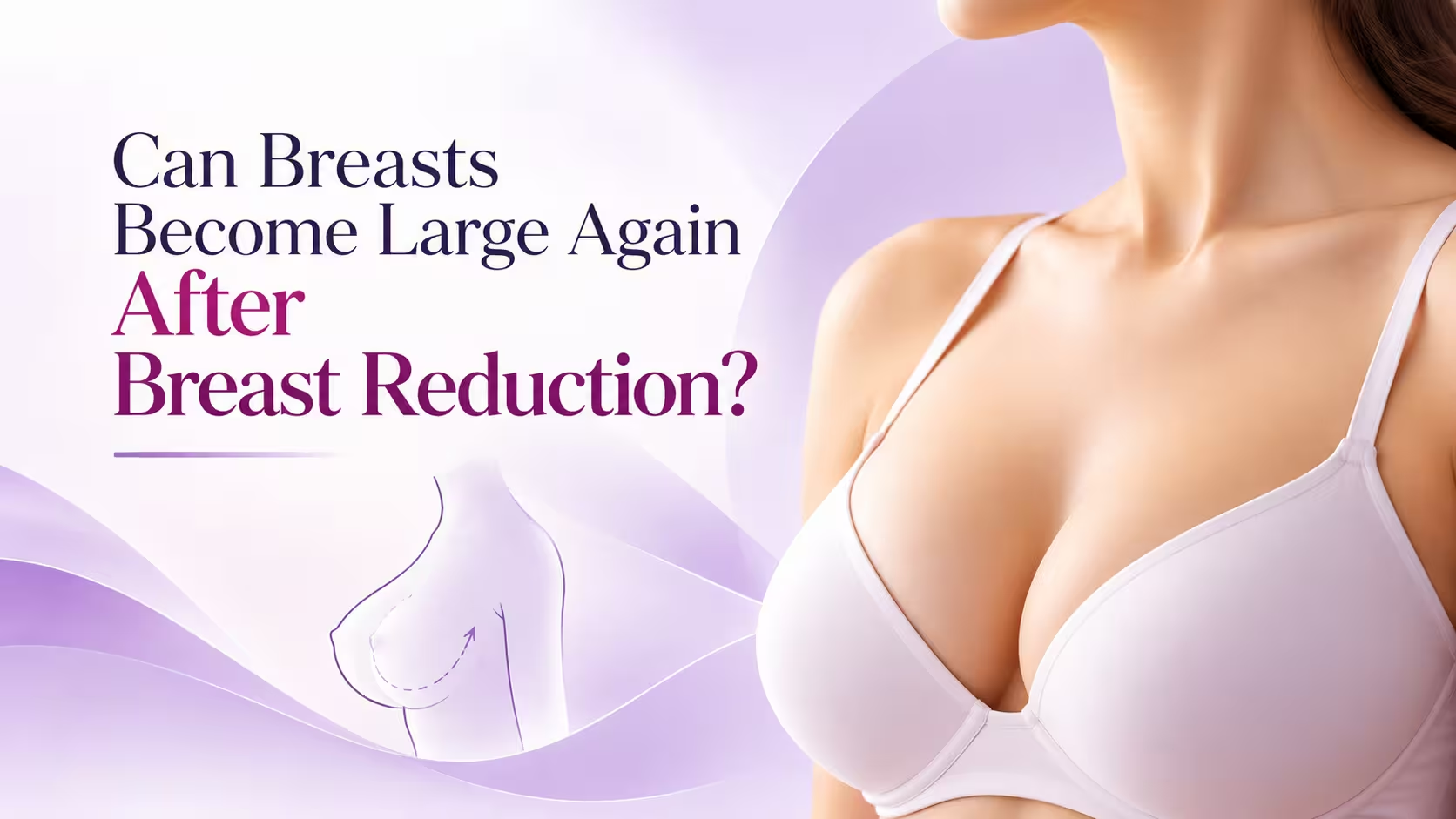
Yes, breasts can become larger again after breast reduction surgery, but the breast tissue removed during the procedure does not simply grow back. Breast reduction permanently removes a portion of breast tissue, fat, and skin. However, the remaining breast tissue can still change over time.
Weight gain, pregnancy, hormonal changes, ageing, changes in skin elasticity, and gravity can affect breast size and shape after surgery. The extent of these changes varies from person to person.
Therefore, breast reduction provides a long-lasting reduction in breast size, but it cannot prevent your breasts from changing throughout the rest of your life.
Breasts do not “grow back” in the same way that some body tissues may regenerate.
During breast reduction surgery, a portion of the breast tissue and excess skin is removed. The remaining breast tissue stays in place and can continue to respond to changes in your body.
Because breasts contain fat, glandular tissue, and other tissues, their size and shape can change with:
Weight changes
Pregnancy
Hormonal changes
Ageing
Changes in skin elasticity
Gravity
This means your breasts may become larger or change shape after breast reduction, but this does not necessarily mean that the removed tissue has grown back.
The amount of change varies considerably between individuals, and your breasts may not return to their original pre-surgery size.
Several factors can contribute to changes in breast size after reduction surgery.
Weight gain can increase breast size because breasts contain fatty tissue. The amount of change depends on how your body stores fat.
Some women may notice a relatively small change, while others may experience a more noticeable increase in breast volume.
Pregnancy causes hormonal changes that can increase breast size and alter breast shape, even if you have previously undergone breast reduction.
Breast tissue changes during pregnancy as the body prepares for breastfeeding. Some of these changes may remain after pregnancy and breastfeeding.
If you are planning to have children soon, discuss the timing of breast reduction with your plastic surgeon.
Changes in hormone levels throughout life can affect breast tissue and breast volume. These changes may occur during different stages of life and can contribute to changes in breast size after reduction.
Ageing naturally affects breast tissue, skin elasticity, and breast shape. Over time, gravity and changes in the supporting tissues can alter the appearance of the breasts.
Age-related changes do not necessarily mean that breast reduction has failed. They are part of the natural changes that can occur in the breasts over time.
Yes. Weight gain can increase breast size after breast reduction because some breast tissue consists of fat.
However, the amount of enlargement varies between individuals. Breast size does not necessarily increase in the same proportion as overall body weight because everyone stores fat differently.
Maintaining a relatively stable weight after breast reduction may help reduce significant changes in breast volume.
Repeated major weight gain and weight loss can also affect breast shape and skin elasticity.
Yes. Pregnancy can increase breast size even if you have previously undergone breast reduction surgery.
Hormonal changes during pregnancy cause the breasts to change as the body prepares for breastfeeding. After pregnancy and breastfeeding, some of the increased breast volume may decrease, but the breasts may not return exactly to their previous shape or size.
Pregnancy can also affect the skin and breast shape.
If you are planning a pregnancy in the near future, discuss the timing of breast reduction with your plastic surgeon. It may be appropriate to postpone surgery depending on your individual circumstances and goals.
The reduction itself is permanent because the breast tissue removed during surgery does not simply grow back.
However, the breasts are not permanently fixed in the exact size and shape created during surgery.
Over the years, your breasts can change because of:
Weight fluctuations
Pregnancy
Hormonal changes
Ageing
Changes in skin elasticity
Gravity
Therefore, it is more accurate to think of breast reduction as creating a smaller breast size at the time of surgery rather than guaranteeing that your breasts will remain exactly the same forever.
Breast reduction can provide long-lasting results, but natural changes to your body can still occur.
You cannot completely prevent future changes in breast size and shape, but some habits may help you maintain your results for longer.
You can:
Try to maintain a relatively stable weight.
Avoid repeated major weight fluctuations when possible.
Allow your body to recover and settle after pregnancy and breastfeeding.
Wear appropriate breast support during physical activity.
Follow your surgeon's post-operative and follow-up instructions.
Attend follow-up appointments when recommended.
There is no specific exercise, diet, or cream that can guarantee that your breasts will remain exactly the same size after breast reduction.
Your breasts will continue to change naturally as your body changes.
Small changes in breast size or shape over several years are generally part of the natural changes that can occur after breast reduction.
However, if your breasts become significantly larger again and you begin experiencing symptoms similar to those you had before surgery—such as back, neck, or shoulder discomfort, skin irritation, or difficulty exercising—it is worth discussing the changes with a qualified plastic surgeon.
Your surgeon can assess whether the change is related to:
Weight gain
Pregnancy
Hormonal changes
Natural ageing
Changes in breast tissue
Other medical or breast-related factors
In selected cases, a revision breast reduction may be considered.
Revision surgery can be more complex than the original procedure because the surgeon needs to account for the previous surgery, existing scars, remaining breast tissue, and the blood supply to the breast and nipple.
A thorough assessment is therefore important before considering another breast reduction.
A gradual change in breast size can occur with weight gain, pregnancy, hormonal changes, or ageing.
However, a sudden change in breast size, particularly when associated with pain, swelling, redness, a new lump, or other unusual symptoms, should not simply be assumed to be a normal consequence of breast reduction.
Such changes should be evaluated by an appropriate healthcare professional.
It can.
Because breasts contain fatty tissue, weight loss may reduce breast volume in some women. The extent of the change varies according to body composition and how an individual's body stores and loses fat.
Significant weight loss may also affect breast shape and skin elasticity.
This is one reason surgeons may recommend reaching a relatively stable weight before breast reduction when substantial weight loss is planned.
The tissue removed during breast reduction is permanently removed. However, the overall appearance and size of your breasts can change over time.
Pregnancy, weight changes, hormones, ageing, skin elasticity, and gravity can all affect the long-term appearance of the breasts.
So, breast reduction should be considered a long-lasting procedure rather than a guarantee that breast size will never change again.
A revision breast reduction may be possible for selected patients if the breasts become significantly larger again or if there is another reason for additional surgery.
However, a second breast reduction requires careful planning.
The surgeon may need to consider:
How much breast tissue remains
Previous surgical technique
Existing scars
Blood supply to the breast and nipple
Nipple position
Breast shape
Skin quality
Your current health
Your reason for considering another reduction
Because revision surgery can be more complex, an individual examination is important before deciding whether another procedure is appropriate.
Breasts can become larger or change shape after breast reduction, but the tissue removed during surgery does not simply grow back.
Future changes can occur because of weight gain, pregnancy, hormonal changes, ageing, changes in skin elasticity, and gravity. These changes are not necessarily a sign that the original breast reduction was unsuccessful.
Maintaining a relatively stable weight, following your surgeon's advice, and allowing your body to settle after pregnancy can help you maintain your result. However, some natural changes cannot be prevented.
If your breasts become significantly larger again or you develop symptoms that were present before your original surgery, a consultation with a qualified plastic surgeon can help determine the cause and whether further treatment is appropriate.
Dr. Preeti Yadav is a plastic and breast contouring surgeon in Gurgaon with more than 15 years of experience. An individual assessment can help determine the most appropriate approach for your breast concerns.
No. The breast tissue removed during breast reduction does not simply grow back. However, the remaining breast tissue can change in size and shape because of weight gain, pregnancy, hormonal changes, ageing, and other factors.
Breast reduction results can be long-lasting, but the breasts naturally change over time. Pregnancy, weight fluctuations, ageing, hormonal changes, skin elasticity, and gravity can alter breast size and shape.
Yes. Weight gain can increase breast volume because breasts contain fatty tissue. The extent of the change varies from person to person.
Yes. Pregnancy can cause the breasts to increase in size because of hormonal and tissue changes. The breasts may change again after pregnancy and breastfeeding.
No specific exercise can guarantee that your breasts will remain the same size after breast reduction. Maintaining overall health and a relatively stable weight may help limit some weight-related changes.
Yes. Weight loss may reduce breast volume because breasts contain fatty tissue. The extent of the change varies between individuals.
A revision breast reduction may be possible in selected cases. However, a second procedure can be more complex because of previous surgery, scarring, remaining tissue, blood supply, and nipple position.
A gradual increase may occur because of weight gain, pregnancy, hormonal changes, or ageing. However, sudden enlargement—especially with pain, swelling, redness, or a new lump—should be evaluated by a healthcare professional.
No. Breast reduction permanently removes some breast tissue, but the remaining breasts can continue to change throughout life because of pregnancy, weight changes, hormones, ageing, skin elasticity, and gravity.