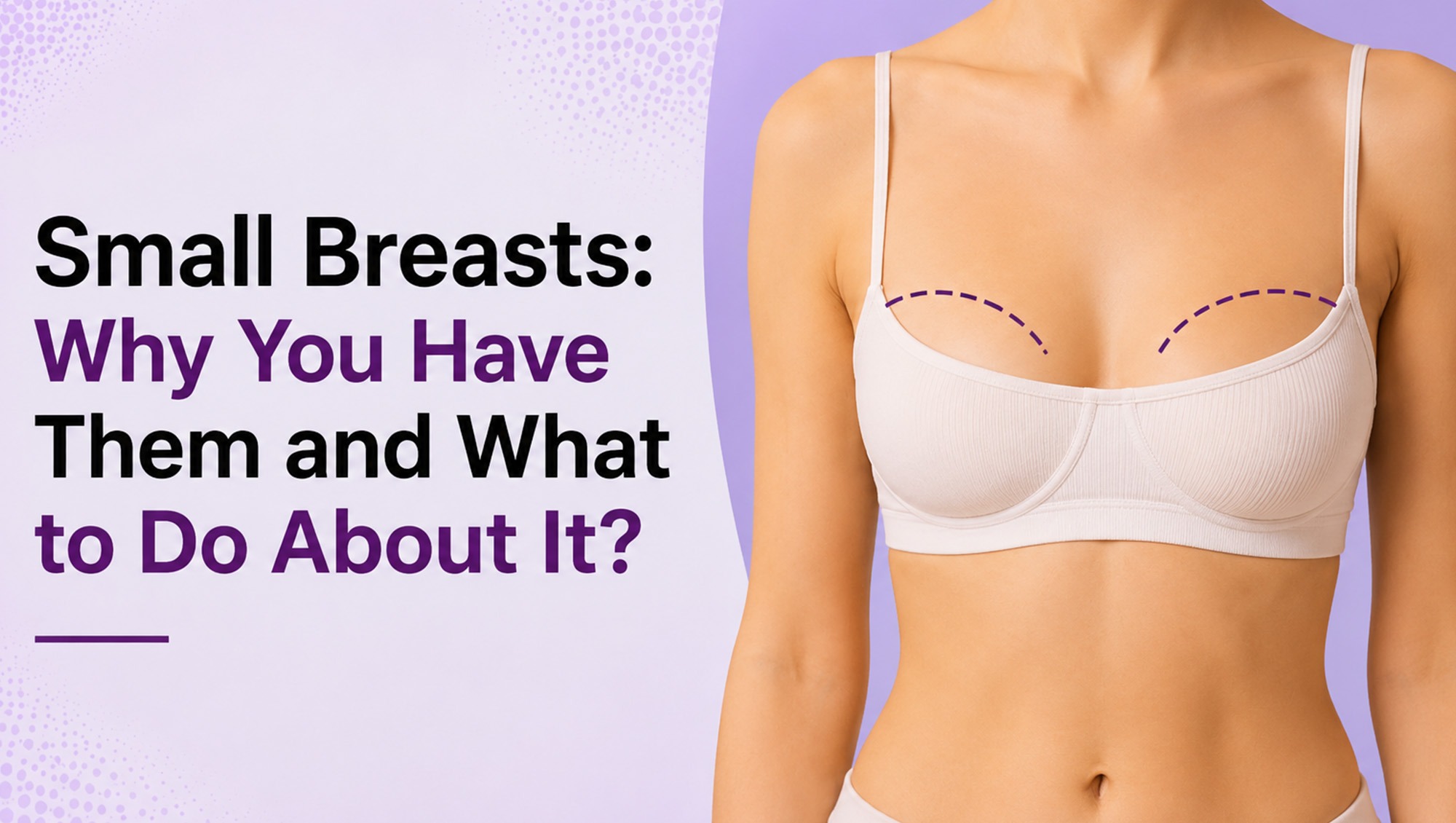
Have you seen yourself in the mirror and thought about why your breasts haven't been growing in the same manner as others? Many women have at some point during their teens or in early adulthood. The truth is that the size of breasts varies naturally from person to person, and no one size is accepted as normal.
The size of your breasts is determined by a mix of elements like the genetics of your body, hormones, body composition, and general growth. Many women naturally have larger breasts, and others have smaller breasts. However, both are completely healthy. Knowing these factors will allow you to feel more confident in your body, and also separate the facts from the common beliefs.
The most frequent reason for small breasts is genetic.
Similar to your body shape, height, eye color, and the appearance of your face, the size of your breasts is usually passed down through the family. If females in your household naturally have smaller breasts, then you could be one of them.
Genetics isn't the only reason.
A variety of factors could affect the way breasts develop and grow.
Your genes play a major factor in determining
Most of the time, the appearance of small breasts is just an aspect of your body shape.
The breasts are composed of the breast tissue as well as fat.
Women with less body fat usually have smaller breasts as the fat is smaller in that region. This is why the size of breasts changes when you lose or gain weight.
The hormones in the body help to grow breasts, particularly during puberty.
Estrogen is among the major hormones that are responsible for the growth of breasts. Because hormone levels vary for every woman, breast development will also vary from one woman to another.
Hormonal changes during:
The size of breasts can change at various phases of life.
In rare cases, some health issues are related to genetics or hormones that can impact the growth of breasts.
If you believe that your breasts are developing in a way that isn't normal or you're concerned about the hormones in your body, it's best to talk with your doctor.
The majority of breast growth occurs between the ages of 8 and 18. However, the size of the breast will change later in the course.
Women notice changes in their appearance because of:
After breast development has been completed, significant natural growth is typically not likely.
No.
Being born with small breasts or small tits does not suggest that there is something wrong in your health.
The size of the breast is not related to:
Many women who have smaller breasts breastfeed with no issues and are completely healthy in their breasts.
This is a common question women are asked.
The answer is simple: not. Training can't cause breast tissue to expand because breasts don't contain muscles.
But, exercises that build the chest muscles under the breasts could improve posture and create a chest appear a little more full or firmer.
Examples include:
These exercises will tone the chest, but they won't be able to noticeably increase the size of breasts.
A variety of products claim to increase the size of breasts in a natural way, for example:
There is little evidence that these procedures can permanently increase the size of the breast.
Be cautious with products that claim to deliver dramatic outcomes without a medically substantiated basis.
If you'd like to have larger breasts, there are a few options for cosmetic surgery.
Implants for breasts are one of the most effective methods to boost the size of your breasts.
Implants come in different forms:
This allows the surgeon to select the option that best suits your body shape and appearance.
The procedure involves taking fat from a different part of your body. It then inserts it into your breasts.
Benefits include:
The growth in size is typically smaller than that of breast implants.
Certain women might benefit from a mixture of treatments, based on their body type and desired goals.
An appointment with a skilled breast surgeon will assist you in determining which option is best for you.
Everyone feels differently about their body.
Some women are completely happy with their naturally small breasts, while others may wish they were larger. Sometimes breast size can affect confidence, clothing choices, or body image.
It's important to remember that breast size does not define beauty or femininity. Feeling confident comes from being comfortable with yourself and making choices that make you happy.
Having naturally small breasts is usually a result of genetics, body composition, and hormonal factors. In most cases, it does not affect overall health, fertility, or the ability to breastfeed. While exercises and lifestyle changes may help improve breast appearance, significant increases in breast size generally require cosmetic treatment options.
If you are considering breast enhancement, consulting Dr. Preeti Yadav, one of the best breast plastic surgeons in India, can help you understand the available options and choose a treatment plan that aligns with your goals and expectations.
The growth of the breasts is dependent on genetics and how the body fat accumulates in the body. Weight gain does not guarantee breast enlargement.
It depends; hormonal treatments must be prescribed by medical professionals.
No. Some women may have smaller breasts due to their hormonal profile.
Yes. The size of the breast does not affect milk production. Women with very small breasts usually breastfeed successfully.
In case a patient wants a long-term enhancement of the breast size, surgery is a more reliable method than any other.